


India has a long tradition of working with natural stone. Marble is used across homes, hotels, offices, temples and commercial spaces because every slab has its own color, pattern and natural character. But before a marble slab reaches a project site, it goes through several stages of selection, cutting, processing and finishing.
A marble factory in India plays an important role in this journey. It converts carefully selected marble blocks into finished slabs and other usable stone products. Modern processing equipment and skilled workmanship help maintain size, surface finish and overall quality throughout this process.
Rama Nature Works is based in Udaipur, Rajasthan and operates a marble manufacturing and processing facility where marble and natural stone are handled with a focus on precision, quality and careful finishing.
What Is a Marble Factory?
A marble factory is a facility where natural marble blocks are processed into finished stone products. A factory is different from a quarry because quarrying focuses on extracting stone from the earth while factory operations focus on preparing that stone for use.
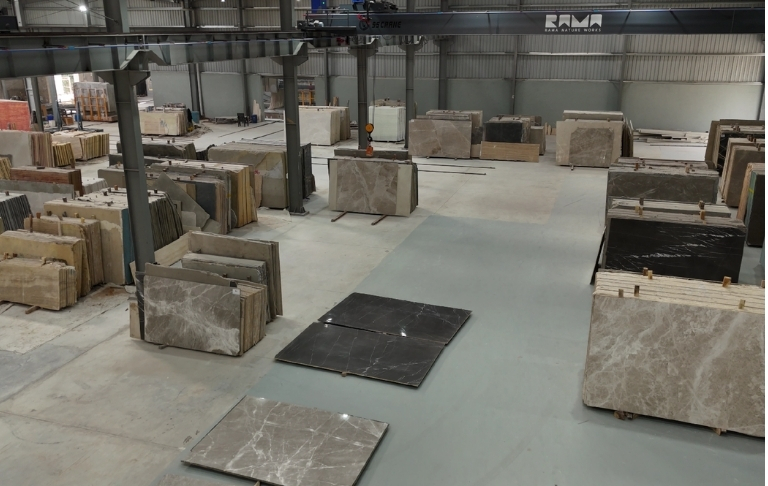
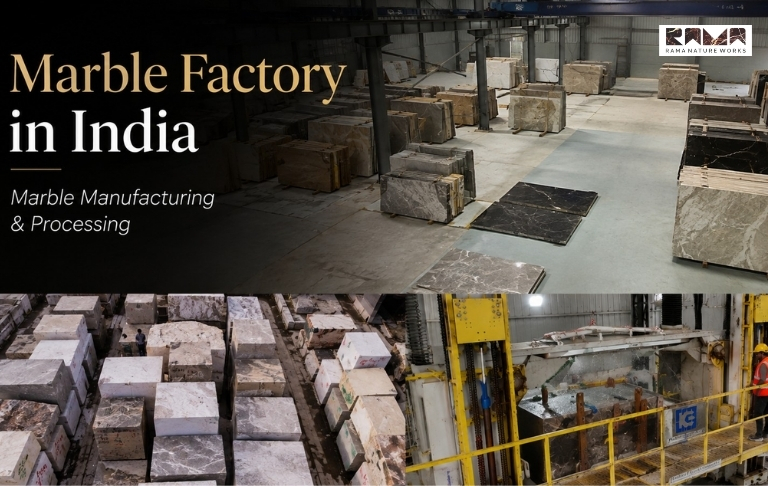
A marble factory can handle several stages after raw blocks arrive at a processing facility. These may include block selection, cutting, fabrication, polishing, finishing and quality inspection. Finished slabs can then be prepared for residential, commercial and architectural projects.
A marble supplier may focus mainly on sourcing and supplying stone. A factory with processing capabilities can have a more direct role in preparing stone according to required sizes, finishes and project needs.
This difference matters to buyers because processing capabilities can affect product consistency and finishing quality.
How Marble Manufacturing Works in India
Marble manufacturing involves more than simply cutting a large block into slabs. Each stage needs careful handling because natural stone can have variations in color, pattern, thickness and structure.
1. Quarrying and Block Extraction
Marble begins its journey in a natural stone quarry. Large blocks are extracted from marble-bearing areas and moved for further processing. Block quality can vary depending on natural characteristics such as color, pattern and internal structure.
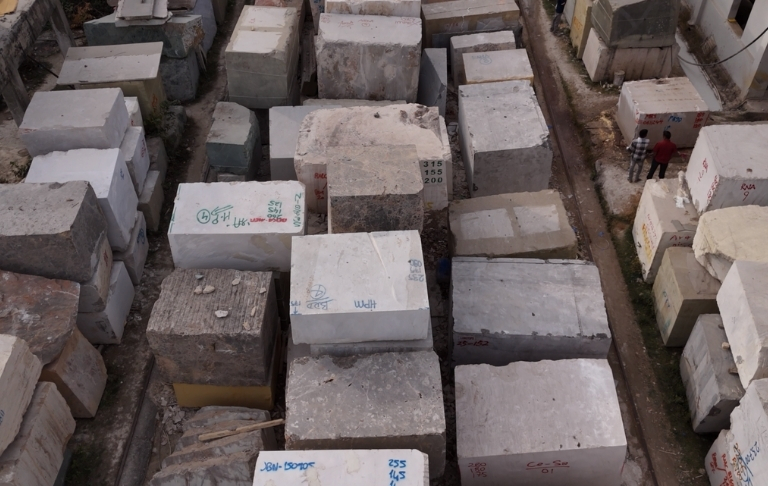
Suitable blocks are selected based on their appearance and intended use. These blocks then move into processing where they can be converted into slabs or other stone products.
2. Stone Selection
Stone selection is an important part of marble manufacturing. A suitable block can help produce slabs with attractive natural patterns and consistent characteristics.
At Rama Nature Works, marble and natural stone are selected with attention to quality, durability and natural appearance. Careful selection at an early stage helps create a better foundation for later processing.
3. Precision Cutting
Selected marble blocks are cut using suitable machinery to create slabs or required stone sections. Cutting needs to be controlled carefully because slab thickness and dimensions can affect how stone is used in a project.
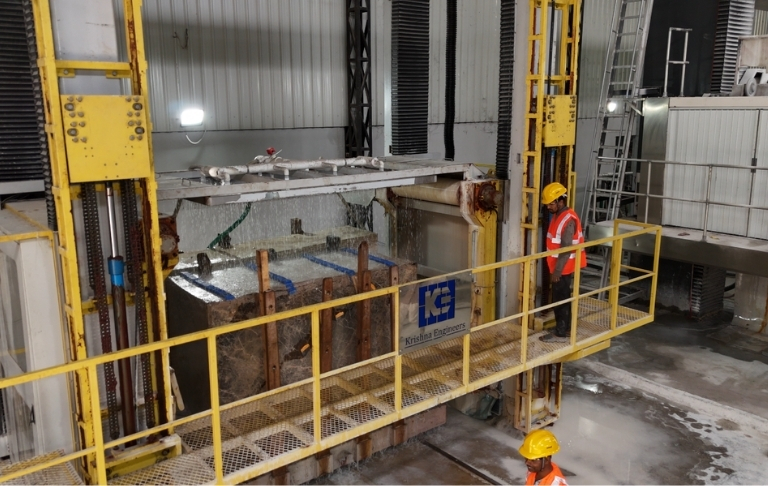
Precision during cutting also helps reduce unnecessary material loss. Each block has its own natural pattern so cutting can also influence how veins and colors appear across finished slabs.
4. Processing and Fabrication
After cutting, marble slabs can go through further processing and fabrication. This stage helps achieve required dimensions and prepare surfaces for finishing.
Processing requirements can differ based on project needs. A residential flooring project may require different slab dimensions and finishes compared with a hotel or commercial interior.
This is why a capable marble processing factory needs suitable equipment and an experienced team that can handle different stone requirements.
5. Polishing and Finishing
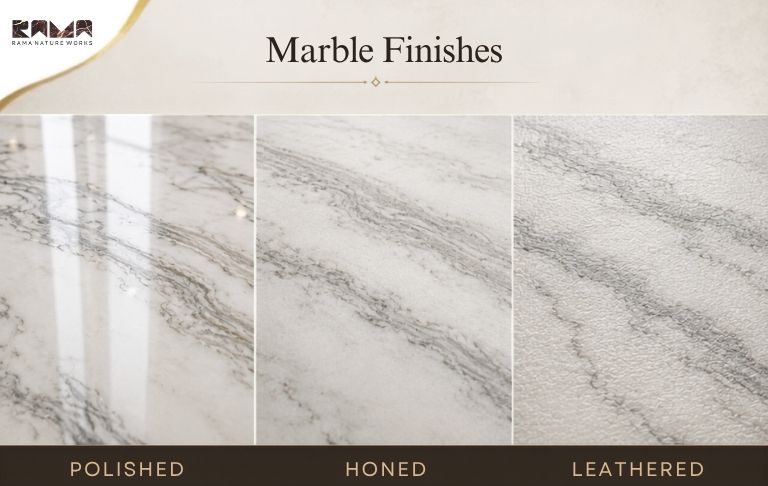
Polishing brings out the natural appearance of marble and creates a smoother surface. Finishing is selected according to how a stone will be used and the appearance required for a project.
A properly finished marble surface can highlight natural colors and patterns while giving slabs a refined appearance. Careful processing is important because surface quality can influence how marble looks after installation.
6. Quality Inspection
Quality inspection takes place before finished material is prepared for dispatch. Slabs can be checked for factors such as dimensions, surface finish and overall appearance.
Natural marble is not a factory-made synthetic material. Variations in color and pattern are part of its character. However, proper inspection helps ensure that finished products meet expected quality standards.
7. Safe Packaging and Dispatch
Finished marble needs proper handling during storage and transportation. Slabs are prepared for safe packing before dispatch so they can be moved with greater care.
Packaging becomes especially important for large project orders where several slabs may need to reach a destination in suitable condition.
Marble Processing in India
Marble processing in India covers several activities that turn natural stone blocks into usable finished products. Cutting is only one part of this work. Processing can also involve sizing, fabrication, polishing, finishing and quality inspection.
Modern processing facilities combine machinery with skilled workmanship. Machinery helps achieve accuracy while experienced workers handle natural variations within each stone.
This combination is important because marble is a natural material. Two blocks from the same source may not look exactly alike. A careful processing approach helps preserve natural beauty while preparing stone for practical use.
Marble slab manufacturing also requires attention to thickness, dimensions, surface appearance and finishing. These details can influence installation and the final appearance of a project.
Marble Factory in Udaipur
Udaipur has an important connection with Rajasthan’s natural stone and marble industry. Its location within a major stone-producing region has helped make it a familiar destination for marble businesses and buyers.
For buyers searching for a marble factory in Udaipur, access to local processing facilities can make sourcing and inspection more convenient. It can also provide an opportunity to understand how marble is selected and processed before purchase.
Rama Nature Works operates its marble manufacturing and processing facility in Udaipur. Its facility combines modern processing infrastructure with an experienced team. Marble and natural stone are processed through stages such as precision cutting, fabrication, polishing and quality inspection.
You can explore the Rama Nature Works marble factory to learn more about its facility and processing capabilities.
What Makes a Good Marble Factory in India?
Choosing a marble factory should involve more than checking available colors or prices. Buyers should also understand how stone is processed and how quality is maintained.
Here are some factors worth considering:
- Factory infrastructure: A suitable facility should have an organized setup for stone processing and handling.
- Processing capabilities: Cutting, fabrication, polishing and finishing capabilities can affect the final product.
- Skilled workforce: Natural stone requires careful handling because every block has its own characteristics.
- Quality inspection: Finished slabs should be checked before dispatch.
- Marble variety: A wider selection can help buyers find stone suitable for different design requirements.
- Finishing quality: Surface treatment can have a major effect on the final appearance of marble.
- Packaging: Proper packing helps protect finished slabs during transportation.
- Supply capability: Buyers with larger requirements should understand whether a supplier can support their project needs.
These points can help buyers make a more informed decision when comparing marble manufacturers in India.
Marble Factory vs Marble Supplier
A marble factory and a marble supplier may perform different roles within the stone industry.
A marble factory focuses on processing natural stone. Its work may include cutting, fabrication, polishing and finishing. A supplier may focus more on sourcing products from factories, quarries or other businesses before supplying them to customers.
However, these roles can overlap. Some businesses process stone and also supply finished marble to customers. This can be useful for buyers who want to discuss product selection and processing requirements with one business.
For large projects, understanding this difference can make communication easier. Buyers can ask whether a business handles processing directly or sources finished products from other facilities.
Marble Manufacturing for Bulk and Large Projects
Marble requirements can vary greatly from one project to another. A homeowner may need a smaller quantity for flooring or a kitchen while a hotel or commercial project may require a much larger volume.
Large projects can include:
- Residential developments
- Hotels
- Commercial buildings
- Offices
- Interior projects
- Large flooring installations
- Wall applications
- Builder projects
Businesses searching for bulk marble suppliers in India should look at more than product availability. Slab consistency, processing quality, packaging and supply planning can all matter when handling larger requirements.
A factory with processing capabilities can also help buyers discuss dimensions and finishing requirements before material is prepared for dispatch.
Why Choose Rama Nature Works?
Rama Nature Works combines marble processing infrastructure with skilled workmanship in its Udaipur facility. Its marble factory supports several stages of stone preparation from selection and precision cutting to processing, polishing and quality inspection.
Advanced machinery supports accurate stone processing while an experienced team handles natural marble with care. The facility also offers custom marble processing based on project requirements.
Quality assurance remains part of each stage before finished products are safely packed and dispatched. This approach allows Rama Nature Works to serve customers looking for processed marble and natural stone for different architectural and interior applications.
Conclusion
A marble factory connects natural stone with its final architectural use. From block selection and precision cutting to polishing, quality inspection and safe dispatch, each stage can influence the appearance and usability of finished marble.
For buyers looking for a marble factory in India or a processing facility in Udaipur, understanding this process can make stone selection easier. Rama Nature Works combines modern processing infrastructure with skilled workmanship to prepare marble and natural stone for different project requirements.
Looking for processed marble or natural stone for your project? Explore the Rama Nature Works marble factory or connect with the team to discuss your requirements.
Frequently Asked Questions
1. What does a marble factory do?
A marble factory processes natural marble blocks into finished slabs. It handles cutting, fabrication, polishing, quality checking and safe packaging.
2. How is marble processed in India?
Marble processing starts with selecting suitable blocks and cutting them into slabs. The slabs are then fabricated, polished, finished and checked before dispatch.
3. How are marble blocks converted into slabs?
Marble blocks are cut with suitable machinery to produce slabs of the required size and thickness. These slabs are then processed and polished for use.
4. Why is Udaipur known for marble?
Udaipur is closely connected with Rajasthan’s marble industry. Its surrounding region supports marble quarrying, processing and trading.
5. What should I check before choosing a marble factory in India?
Check its processing facilities, cutting and finishing quality, quality checks and marble selection. For large orders, also confirm packaging and supply capability.
6. Can marble factories handle bulk project requirements?
Yes, factories with suitable processing and supply facilities can handle bulk orders. Buyers should confirm quantity, slab size, finish and delivery requirements.