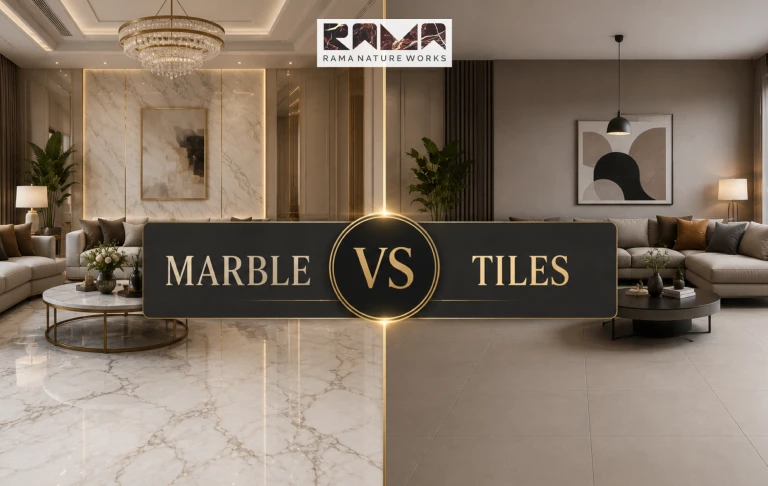

If you’re looking for a quick answer, the choice between marble and tiles depends on your budget and long-term goals. Marble is a natural stone which offers exceptional quality, timeless beauty and incredible toughness. It enhances the value of your home and lasts for a long time provided it is properly maintained. It is a perfect fit for high-end residential developments as well as luxury interiors and premium commercial spaces.
Tiles are manufactured items that are made of clay and minerals. They are very useful, economical and require little or no maintenance. They are waterproof and are available in thousands of designs. Tiles are great for projects that are budget-friendly as well as rental properties and spaces which require frequent cleaning.
In short, pick marble for a long-lasting flooring investment as well as elegant and stylish interiors. Select tiles if you require an easy, cost-effective and low-maintenance flooring option.
Marble vs Tiles: Quick Answer
Selecting the best flooring material is among the most crucial choices you’ll make in any renovation or construction project. Flooring covers the largest surface area in every room. It forms the foundation of your interior design. It is also a major financial investment.
A lot of homeowners and designers have the same issue when deciding on their flooring. They always compare marble and tiles. Both materials offer distinct advantages. Each material serves a different purpose. Making the wrong choice could result in regret, costly repairs or an appearance that is quickly out of fashion.
You could be creating a luxurious villa or renovating an apartment. You will need a flooring option that balances aesthetics, durability and cost. This detailed guide will help you understand the difference between marble and tiles. We will compare their features, advantages and disadvantages. When you finish this article, you’ll be aware of which flooring material is the best fit for your particular project.
What is Marble?
Marble is a high-quality natural stone. It is formed deep beneath the Earth’s surface over the course of millions of years. High temperatures and extreme pressure turn limestone into this gorgeous, hard, durable and dense material. Since it is made by the elements, no two marble slabs will ever be exactly the same. Each slab has unique patterns and colours. Natural beauty adds an air of exclusivity and luxury to any room.
Designers prefer natural marble flooring because of its sophisticated appeal. Buyers can select from gorgeous Indian marble slabs that are renowned for their extraordinary durability and timeless appearance. If you are looking for stunning colours and striking lines, Imported marble slabs provide stunning choices from all over the globe. Marble requires professional installation and periodic polishing, but it will reward homeowners with flooring that grows better with age.
What are Tiles?
Tiles are man-made flooring material. Manufacturers make them by baking clay, minerals, and sand at extremely high temperatures. The most popular types of tiles used as flooring include vitrified tiles as well as ceramic tiles. Vitrified tiles are coated with a glass-like finish, which making them extremely strong and impervious to water as well as staining.
Modern technology permits factories to create almost any design on the tile’s surface. Tiles can resemble of concrete, wood and some even look like natural stones. They are manufactured in large quantities, which makes their cost affordable. Tiles are a practical flooring material that is easy to install and requires minimal maintenance.
Marble vs Tiles: Quick Comparison Table
| Feature | Natural Marble | Floor Tiles |
| Appearance | Unique natural veining, highly luxurious | Patterns printed, uniform look |
| Durability | Highly durable and lasts for a long time | Moderately durable and may chip over time |
| Cost | Premium investment | Budget-friendly |
| Maintenance | It requires sealing and periodic polishing | Easy to clean with regular wiping. |
| Lifespan | 50 to 100+ years | 10 to 15 years old |
| Installation | Needs skilled workers and a long time | Simple and quick |
| Repair | It can be polished to look like new | Damaged tiles need replacement. |
| Water Resistance | Moderate, requires sealing | Naturally non-porous, high grade |
| Property Value | Significantly increases the value of resales | Does not significantly increase property value. |
| Best Applications | Living rooms, luxury interiors and lobbies | Bathrooms, budget-friendly renovations, outside |
Marble vs Tiles: Detailed Comparison
Understanding the differences in detail between marble and tiles can assist you in making an informed decision. Let’s compare them across important areas.
Appearance
Marble is a stunning natural material. The subtle hue variations and intricate veins provide a sophisticated, elegant appearance that synthetic materials cannot duplicate. Tiles are printed digitally. Although high-quality tiles look nice from a distance, they are often reprinted with patterns. Closer, tiles do not have the natural beauty and depth of natural stone.
Durability
The durability of flooring is an important aspect for property owners. Marble is a hard rock. It can stand up to heavy foot traffic for years without losing its strength. Tiles are fairly durable, but they are brittle. If a heavy object falls on a tile, it may chip or crack.
Strength
Because marble is a very dense, naturally occurring stone it has enormous compressive strength. It is strong enough to support heavy furniture effortlessly. Tiles are made of clay or ceramic core. Their strength is contingent on how well the floor underneath was leveled at the time of the installation. A hollow space beneath a tile increases the risk of cracking.
Maintenance
The maintenance of flooring is different in both. Tiles are the best choice for everyday convenience. They are easy to clean using household chemicals and not worrying. Marble needs a bit more attention. Use pH neutral cleaners to shield the stone. Also, you should seal the marble regularly to ensure its stain-resistant properties.
Water Resistance
Vitrified tiles are almost non-porous. They do not absorb water making them extremely effective in humid areas. Marble is naturally porous. It will absorb liquids if not properly maintained for prolonged periods. However, marble that is sealed is extremely resistant to everyday wetness and spills.
Installation
Installation of tiles is a simple process. An experienced mason could install tiles over a large area in just a few hours using simple adhesives. Marble installation is a skill. It involves handling massive stone slabs, precision cutting and leveling of cement beds, and a series of on-site polishing processes. It is more laborious but gives a smooth top-quality quality.
Cost
If you compare marble vs. tile prices it is evident that tiles are cheaper initially. They are less expensive to purchase and install. Marble is a high-end flooring material. The transportation, extraction and professional installation make it a more expensive initial investment. But, this is a reflection of its status as a luxurious product.
Lifespan
Which flooring is more durable? Marble is the obvious winner. If it is maintained properly, a marble floor can effortlessly outlast the building. Many historical monuments still have the old marble floors. Tiles are only used for a short time. Their printed coating wears off with time. Tile floors typically require complete replacement after 10 – 15 years.
Heat Resistance
Marble is naturally cool to the feel. This makes it a comfortable flooring material in hot environments such as India. It sucks up heat and disperses it efficiently. Tiles are also able to remain cool, yet they can adapt faster to the surrounding temperature.
Repair
This is the place where natural stone flooring really shines. If marble is scratched or dulls in its shine then you can simply call an expert to polish it. A fresh polish will restore the original shine. If a tile is chipped or gets scratched, it is not possible to fix it. It is necessary to tear the tile and replace it. It is always advisable to keep spare tiles from the same batch.
Property Value
What flooring can increase the value of your home? Real estate professionals believe that marble with a premium finish improves the value of a house as well as commercial property. Customers see marble as a symbol of luxury and quality. Tiles are the standard construction materials. They don’t add any extra value to the value of your home.
Luxury Appeal
Nothing says elegant interiors quite like a polished marble floor. With its seamless joints and mirror-like surface give a feeling of elegance. Luxury hotels, premium villas and corporate headquarters typically make use of marble because of this. Tiles appear neat and practical however they seldom convey the feeling of genuine luxury.
Environmental Impact
Marble is a natural product. It is carved from earth and then shaped to fit into the shape of a. It is free of harsh synthetic chemicals utilized in its creation. Tile production is an industrial process that requires burning fossil fuels as well as using different chemical glazes.
Long-Term Investment
Is marble worth the cost? Absolutely. While tiles today are more affordable however, you’ll likely have to replace them two times over the next 30 years. Marble is a once-in-a-lifetime investment. Its durability over time and its ability to be restored makes it cost-effective over its long time.
Pros and Cons of Marble
| Pros | Cons |
| Elegant, unique and extravagant | Installation and purchase cost |
| Highly durable and long-lasting | It requires periodic seals and simple cleaning |
| Re-polished to eliminate scratches | Installation can be time-consuming and labor-intensive. |
| Significantly increases the value of property | Feel slippery when wet, especially if it is highly polished |
| Cool underfoot is perfect for warmer weather. | The heavier material demands a solid foundation |
Pros and Cons of Tiles
| Pros | Cons |
| Affordable and budget-friendly. | The shorter life span, the more frequent replacement at some point |
| Highly resistant to stains and water | The skin is susceptible to chipping and cracking due to heavy impact |
| Many patterns and colors available | The polish cannot be repaired or replaced once the damage is done |
| Fast and easy to install. | Does not affect the resale value of property. |
| Maintenance is not required. | Grout lines can get dirty and discolored |
Marble vs Tiles: Which Flooring Material Works Best for Different Spaces?
Different parts of a structure are subject to different types of usage. Here’s a simple guide to how to utilize each type of material.
Living Room
Living rooms are the main part of your house. It is the perfect place to show off your home. Marble flooring made from natural stone is the best option here. It gives a striking first impression, and offers an incredibly smooth, sweeping appearance.
Bedroom
Bedrooms should have a tranquil and comfortable ambience. Both materials are great for this. But marble is the luxury of everyday life. Awaking and walking across a beautiful, cool natural stone floor enhances your living experience.
Kitchen
Kitchens can be a victim of spills, falling dishes and a lot of foot traffic. Vitrified tiles are a useful and safe option for kitchen floors because of their stain-resistant properties. Many homeowners utilize sealed marble for their kitchen countertops that are top of the line.
Bathroom
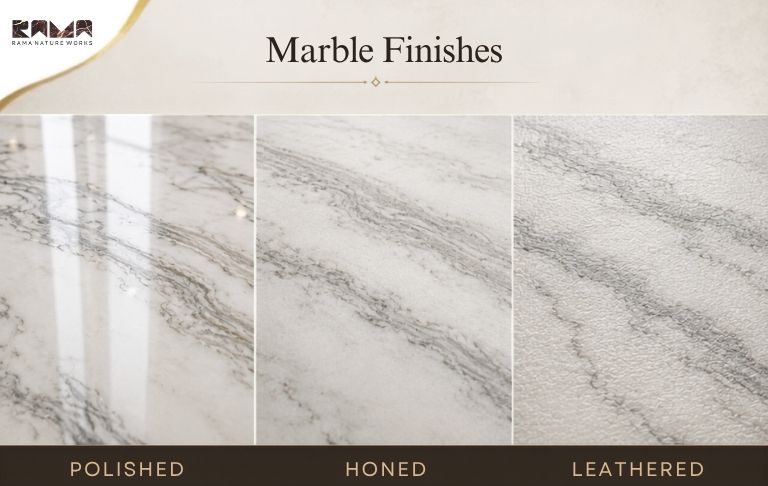
Bathrooms are often immersed in water. Matte-finish tiles or anti-skid are the most popular choice for bathrooms to avoid slippage. If you’re looking for a luxurious spa-like bathroom the honed or textured marble is a great choice for grip and gorgeous appearance.
Office
First impressions count in the business world. for reception spaces, executive cabins, and boardrooms, marble is a great choice to establish confidence, stability and achievement. For areas that are hidden from staff or cafeterias with a lot of food, the durable tiles are a cost-effective option.
Hotels
Hospitality is heavily dependent on aesthetic appeal and the guests’ experience. The grand lobbies and luxurious suites require the luxury of imported or top Indian marble. Standard rooms or corridors for service usually use premium tiles to keep the budget in check.
Commercial Projects
Airports and shopping malls need an extreme level of durability. Commercial areas that see a lot of traffic benefit from the strength of granite or dense marble. For smaller retail stores with a an enviable lease tiles are a quick and effective flooring solution.
Luxury Villas
If you’re planning to build an extravagant villa it is a fact. Marble is the preferred material. Utilizing tiles in a multi-crore home immediately reduces the value of the property. Natural stone is crucial to keeping the high-end quality of real property.
Common Mistakes People Make While Choosing Flooring
A lot of buyers make costly mistakes in the process of selecting flooring. Avoid these common mistakes.
Choose flooring not only on cost. Are tiles less expensive than marble? Yes, initially. However, replacing damaged tiles after five years is more expensive in frustration and work. Consider flooring as a long-term investment.
Another error is following blindly the latest trends on the internet. A strikingly designed tile may appear appealing on social media however it will appear old-fashioned in three years. Natural stone is a timeless style that will never go out of fashion.
In the end, many people overlook the importance of a professional installation. The most costly marble can appear ugly when laid by a novice contractor. Always allocate a proper budget for skilled craftsmen.
Expert Tips Before Choosing Marble or Tiles
Before making your final purchase, you should test the material. Purchase a single tile and an incredibly small piece of marble. Bring them to the site. Check out how they look in the light of your room at night and during the day.
Make a plan for your budget in a realistic manner. If your budget is limited it is best to purchase high-quality tiles rather than inferior, structurally weak marble. If you can afford marble, don’t sacrifice the installation materials. Make use of high-quality cement and sealants.
Take note of your routine maintenance. If you are a busy household that includes toddlers and pets and you’re not able to be expected to clean off spills swiftly tiles could provide you with peace of mind. If you are a fan of the finer things in life and don’t think about basic maintenance marble can reward you with unparalleled beauty.
Marble vs Tiles: Which One Should You Choose?
The choice of marble or tiles that is the best ultimately comes down to the goals of your project.
Pick tiles if renovating a rental or working on a tight budget, or have to complete your project in just a few days. Tiles offer easy-to-clean surfaces that can serve their main function effectively.
Consider marble if creating your dream home, creating an office space that has to be impressive or if you are searching for an investment for the long term. Marble is more than an element of construction. It’s an element of design that adds natural beauty into every room. For homes that are luxurious and high-end commercial projects the natural stones are unbeatable.
Conclusion
The marble vs tiles debate becomes much easier once you understand your project’s requirements and the purpose of the space. Each material excels in various categories. Tiles provide unbeatable ease of use and flexibility in budgets to accommodate the demands of modern life. But when it comes down to absolute luxury, structural durability and creating a luxurious atmosphere there is nothing that can beat the natural elegance of marble. The right flooring choice can transform a space into an incredible space.
If you are looking for flooring that combines timeless elegance with long-lasting durability, natural stone is an excellent choice. Rama Nature Works invites you to explore the best range of marbles available in the world of Rama Nature Works. Explore our exclusive collection today and let us assist you create the luxurious space you’ve always wanted.
Need expert guidance for your marble selection? Contact Us today.
FAQ’s
What is better for flooring, marble or tiles?
The better flooring material depends on your needs. Marble is ideal if you want natural beauty, long-term durability and a luxurious look. Tiles are a better choice if you prefer a budget-friendly, low-maintenance and water-resistant flooring option.
Is marble more durable than tiles?
Yes. Natural marble is generally more durable than tiles and can last for decades with proper care. While tiles are strong, they are more likely to chip or crack under heavy impact and usually have a shorter lifespan.
Which flooring is easier to maintain, marble or tiles?
Tiles are easier to maintain because they resist stains and require only regular cleaning. Marble needs periodic sealing and proper care to preserve its natural shine and prevent staining.
Does marble increase property value compared to tiles?
Yes. Marble is considered a premium natural stone that enhances the appearance and value of a property. It is often preferred for luxury homes, villas, hotels and commercial spaces.
Is marble worth the investment for flooring?
If you are looking for long-lasting durability, timeless elegance and higher property value, marble is a worthwhile investment. Although it costs more than tiles initially, its longevity and premium appearance make it a cost-effective choice over time.