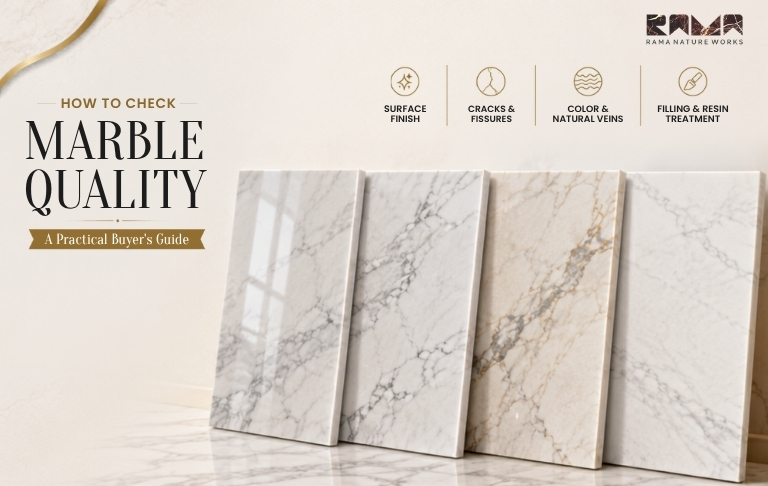


Marble is popular because of its natural colours, beautiful patterns and unique veins. But the type of marble is not the only thing that affects its look. The finish given to the surface also makes a big difference. The same marble can look shiny and bright with a polished finish, soft and smooth with a honed finish or textured with a leathered finish.
Choosing the right marble finish is important when selecting stone for a home, hotel, office or any other space. Different finishes give marble a different look and feel. In this guide, we will explain the main types of marble finishes, where they are commonly used and how you can choose the right one for your space.
What Is a Marble Finish?
A marble finish is the final treatment given to the surface of a marble slab to create a particular level of shine, smoothness or texture.
It is useful to understand the difference between marble variety and marble finish. A marble variety tells you what type of stone you are choosing. The finish tells you how its surface has been processed.
For example, Cherry Gold is a marble variety. That marble can have a different surface appearance depending on the finish selected. The stone remains the same but its shine, texture and visual character can change.
In simple terms:
Marble variety = the stone
Marble finish = the surface appearance of the stone
Why Does Marble Finish Matter?
A marble finish does more than change the shine of a slab. It can influence how the stone looks under natural and artificial light, how its texture feels and how its natural colour and veining are perceived.
A glossy finish can make a marble surface look bright and dramatic while a matte finish can create a quieter and more understated appearance. Textured finishes can add depth and character to a surface.
Finish selection can also depend on where the marble will be used. Flooring, wall cladding, countertops and decorative surfaces may have different design and maintenance requirements.
Actual performance can vary depending on the marble itself, its finish, installation and intended application. So choosing a finish should always be based on the complete project rather than appearance alone.
Types of Marble Finishes
There are several types of marble finishes available. Some are smooth and reflective while others create a more textured surface.
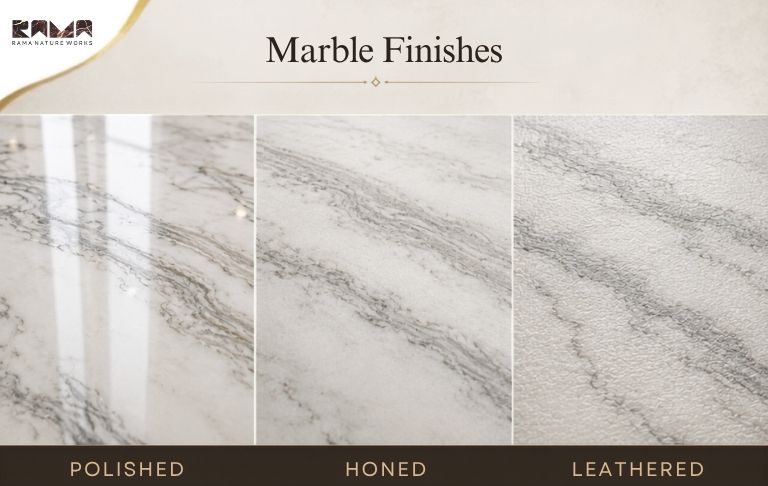
Polished Marble
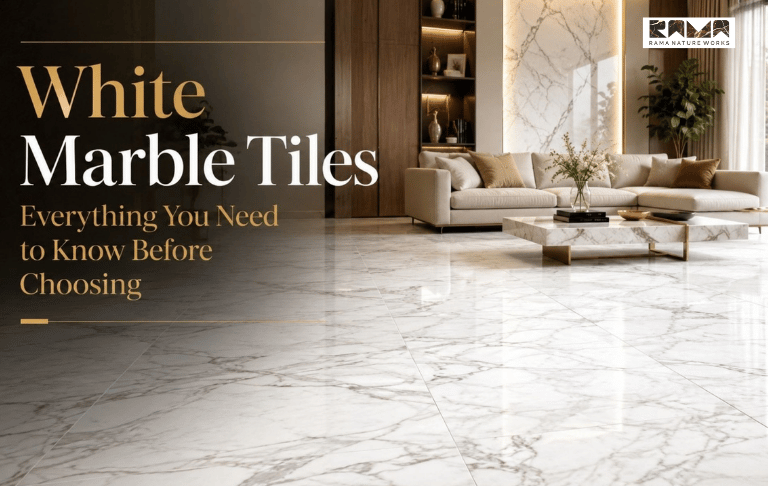
Polished marble has a smooth and highly reflective surface with a noticeable gloss. It is created through a fine grinding and polishing process that brings out a rich visual depth in the stone.
One of the biggest attractions of polished marble is how it interacts with light. Its reflective surface can make natural colour and veining appear more prominent and create a bright, luxurious appearance.
Polished marble is often considered for formal living areas, entrances, feature walls, hotels and other interiors where visual impact is important.
Its smooth surface also makes it easy to wipe and clean. However, its glossy appearance can make scratches, fingerprints or marks more noticeable depending on the stone and how the surface is used.
If your priority is a classic marble look with strong shine and visual drama, polished marble can be a suitable option.
Honed Marble
What is honed marble? Honed marble has a smooth surface with a matte or soft satin appearance rather than a strong gloss.
The surface is processed to remove the high shine while retaining a smooth feel. This gives honed marble a more subtle appearance compared with polished marble.
Honed marble can work well when you want the natural character of marble without a highly reflective surface. It is often considered for floors, bathrooms, hallways, wall surfaces and interiors where a softer visual effect is preferred.
Another feature of a honed surface is that minor surface marks may be less noticeable than they can be on a highly glossy finish. However, maintenance requirements still depend on the specific marble, sealing and application.
For a calm and understated look, honed marble can be a strong choice.
Leathered Marble
Leathered marble, also known as a leather finish marble, has a textured surface with a tactile feel. Instead of creating a mirror-like shine, this finish brings out the natural character of the stone through subtle texture and depth.
A marble leather finish can make the surface feel more interesting when touched. It can also create a different visual effect as light moves across its texture.
Leathered marble is often considered for feature surfaces, countertops, wall applications and interiors where a more natural and tactile appearance is desired.
Its textured surface can also be less visually sensitive to fingerprints and small marks than a highly polished surface. Still, cleaning and maintenance should be considered because textured surfaces can require more attention in some applications.
Brushed Marble
Brushed marble has a textured surface created through brushing processes. It gives the stone a softer and more natural character while reducing the smooth and reflective quality associated with polished marble.
This finish can be considered when texture is an important part of the design. It works particularly well with interiors that aim for a natural, aged or relaxed material feel.
Sandblasted Marble
Sandblasted marble has a matte and textured surface created by treating the stone with an abrasive process. This changes the smoothness of the surface and gives it a more granular appearance.
Sandblasted marble can be considered for projects where a more textured natural stone surface is desired. The exact appearance and suitability depend on the marble and the intended application.
Flamed Marble
Flamed marble is a textured finish created through a controlled high-temperature treatment of the stone surface. It produces a more rugged and natural appearance compared with polished or honed surfaces.
Flamed finishes are more commonly associated with textured natural stone applications where surface character is important. Suitability should be evaluated based on the specific marble and project requirements.
Polished vs Honed vs Leathered Marble
When comparing marble finishes, polished, honed and leathered are three of the most useful options to understand.
| Feature | Polished | Honed | Leathered |
| Appearance | Glossy and reflective | Soft and matte | Textured with subtle depth |
| Shine | High | Low | Low to moderate |
| Surface feel | Smooth | Smooth | Tactile and textured |
| Light reflection | Strong | Soft | Diffused |
| Visual character | Dramatic | Understated | Natural and distinctive |
| Common reason for selection | High visual impact | Soft appearance | Texture and character |
The right choice in a honed vs polished marble comparison depends on the project. Leathered marble offers another option when texture is more important than a high-gloss appearance.
How Marble Finishes Change the Look of Natural Stone
Finish can change how you experience the same piece of marble.
A polished surface reflects more light and can make natural veining appear stronger. A honed surface reduces reflection and gives the stone a softer appearance. A leathered surface adds texture which can create more visible depth across the slab.
This is why natural stone finishes should be considered alongside colour and pattern. A marble that looks one way in a polished sample may create a very different impression with a matte or textured finish.
Lighting also matters. Always view samples under lighting similar to the space where the marble will be installed.
How to Choose the Best Marble Finish
There is no single finish that is best for every project. The right choice depends on what you want from the stone.
Choose polished marble when a glossy appearance, strong light reflection and visual impact are important.
Consider honed marble when you prefer a softer matte or satin appearance without a high level of shine.
Consider leathered marble when texture, tactile character and a more natural visual effect are important.
Also think about location, intended use, traffic, lighting, surface feel, maintenance expectations and the overall design style of your space.
A finish should support the purpose of the marble rather than simply follow a trend.
How Are Marble Finishes Created?
Marble finishes are created by treating the surface of a prepared marble slab using suitable mechanical, abrasive or other finishing processes.
The process can vary depending on the finish being created and the characteristics of the stone. The slab is prepared before the desired surface treatment is applied and then checked to achieve the required appearance.
The same marble can therefore have different surface finishes while retaining its natural colour, pattern and identity.
Does Marble Finish Affect Maintenance and Cost?
Yes, finish can be one factor that influences maintenance and processing requirements, but it is not the only one.
Maintenance can depend on the marble variety, surface finish, sealing, installation and how the stone is used. Textured finishes may need different cleaning attention compared with smooth surfaces.
Cost can also vary based on the marble variety, finishing process, slab size, thickness, customization and fabrication requirements. There is no single price that applies to every marble finish.
For an accurate choice, it is better to evaluate the specific stone and finish together rather than comparing finishes only by price.
How to Evaluate a Marble Finish Before Buying
Before finalizing your marble, take time to see and feel the actual finish.
- Ask for a physical sample whenever possible.
- View it under lighting similar to your project.
- Compare different finishes side by side.
- Feel the surface to understand its texture.
- Consider where the marble will be installed.
- Ask about cleaning and sealing requirements.
- Confirm the final finish before fabrication or installation.
A small sample can help you understand details that may not be obvious from a photograph.
Marble Finishes at Rama Nature Works
Rama Nature Works offers a collection of natural marble varieties suited to different design preferences and project requirements. The collection includes varieties such as Cherry Gold, Royal Black, Golden Spider, Volakas, Verde Levante and Carrara along with other premium Indian Marble and Imported Marble options.
Each marble has its own colour, pattern and natural character. The right finish can further influence how these qualities are presented in an interior.
For architects, interior designers and homeowners, exploring the marble variety alongside its suitable finishing options can help create a more informed selection. Rama Nature Works can help you explore natural marble options and discuss the right finishing requirements for your project. Contact us today to find the right marble for your space.
Frequently Asked Questions
What are the different types of marble finishes?
Common marble finishes include polished, honed, leathered, brushed, sandblasted and flamed finishes. Each creates a different surface appearance and texture.
What is polished marble?
Polished marble has a smooth, glossy surface that reflects light and can highlight the natural colour and veining of the stone.
What is honed marble?
Honed marble has a smooth matte or satin surface with much less reflection than polished marble. It is chosen when a softer and more understated appearance is preferred.
What is a leather finish on marble?
A leather finish marble has a textured surface that gives the stone a tactile feel and a more natural visual character compared with a highly polished surface.
What is the difference between polished and honed marble?
Polished marble has a high-gloss reflective surface while honed marble has a softer matte or satin appearance. The right choice depends on the desired look and project requirements.
How do I choose the right marble finish?
Consider the marble variety, desired appearance, location, lighting, intended use, surface texture and maintenance expectations before choosing a finish.
Can the same marble have different finishes?
Yes. A marble variety can be processed with different surface finishes. The stone remains the same but its appearance, texture and interaction with light can change.